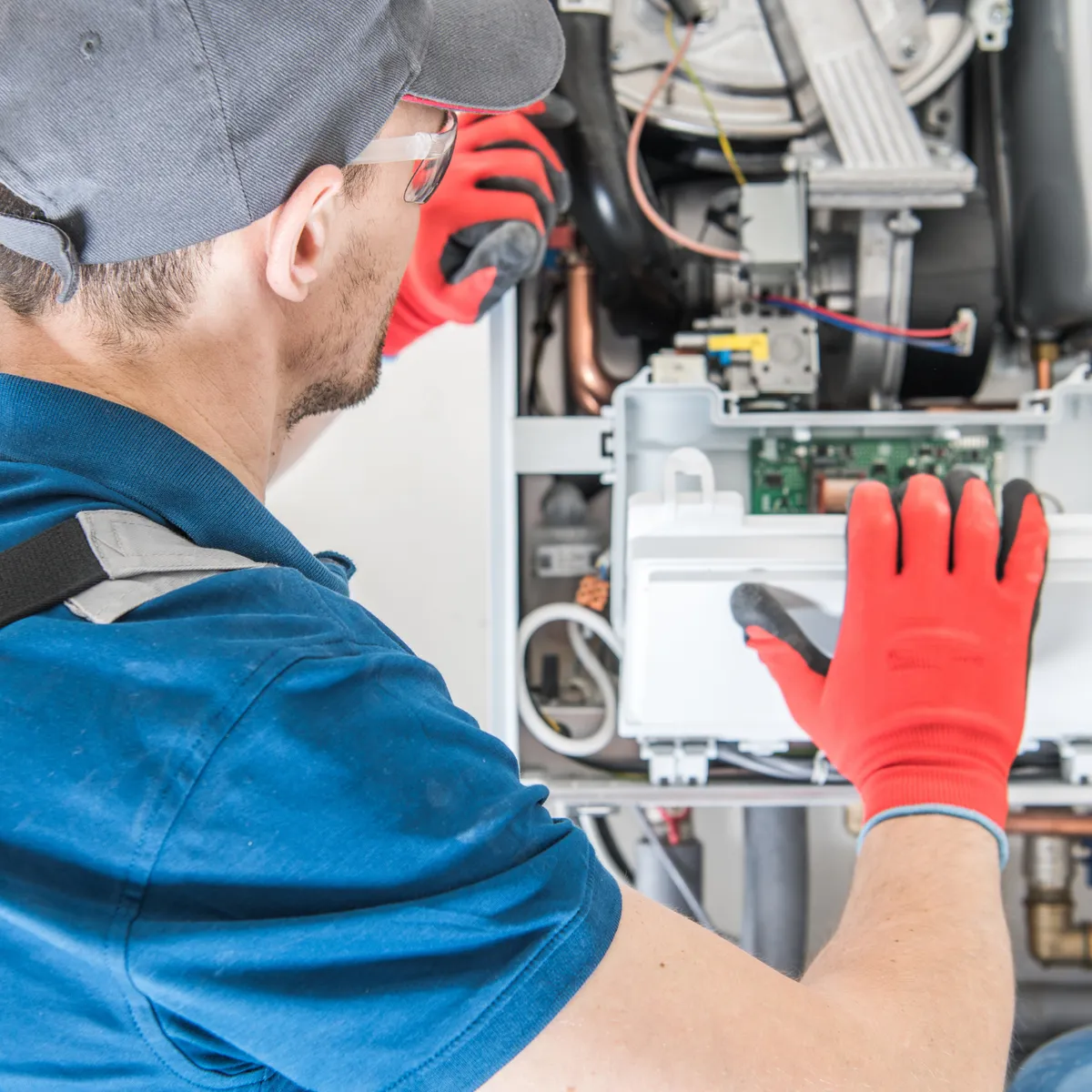
What boiler fuel, model, heat emitters, and symptoms should be recorded before requesting service?
Boiler service depends on the appliance type and the hydronic system it supplies. A natural-draft cast-iron boiler serving radiators differs from a condensing boiler connected to in-floor loops, and gas, propane, and oil equipment have distinct fuel and combustion requirements. No-heat, leakage, or pressure symptoms may point to ignition, circulator, or expansion-tank issues. Diagnosis should establish the fault and system condition before repair, replacement, or maintenance is selected.
Record the fuel, boiler model, heat emitters, symptoms, and any pressure or leak observations. A unit that will not fire differs from a circulator fault or recurring pressure loss, which may involve the expansion tank or another hydronic component. These distinctions define the diagnostic work. Replacement planning must also account for whether the system serves radiators or in-floor loops.
Gas, propane, and oil boiler fault diagnosis
Cast-iron radiator systems versus condensing boilers and in-floor loops
Inspection-based hydronic maintenance and flushing decisions
Assessment and Scope
Questions for the Proposed Work
01
Distinguish ignition, circulation, and pressure faults
A boiler that will not fire calls for a different diagnosis from one that fires but does not circulate heat through the system. Ignition components, the circulator, pressure-relief valve, and expansion tank are distinct possibilities, and observed leaks or pressure changes help narrow the scope. Fuel type also matters to the service assessment. Do not attempt to work on fuel, combustion, pressure controls, or internal electrical parts.
02
Match replacement to boiler and distribution type
A replacement should be selected for the property's heating requirement and hydronic distribution, not simply as a like-for-like cabinet swap. A natural-draft cast-iron boiler feeding radiators has different characteristics from a condensing, modulating boiler serving in-floor loops. Fuel availability and the existing venting arrangement also affect scope. Those details help determine whether the proposed boiler and distribution can work together.
03
Base maintenance on instructions and findings
Maintenance should follow the boiler manufacturer's instructions and inspection findings rather than assume that every system needs an annual flush. Inspection may identify corrosion, deposits, leakage, or another condition that changes the recommended work. Gas, propane, and oil appliances also have fuel-specific combustion and venting considerations. A recorded finding provides a reason for any cleaning, adjustment, or repair instead of treating flushing as automatic.
Compare the next step
Coordinate hydronic piping, emitter locations, and controls before walls or floors conceal the routes. Ask which installation checks happen before enclosure and who protects operating equipment while other trades work. Keep service points accessible and obtain an updated zone record after construction so later repairs can refer to the finished system.
Leave fuel, combustion, electrical, and pressure-system work to a qualified contractor. Do not adjust safety devices or repeatedly add water to a system with an unexplained leak or pressure loss.